Selected work.

A selection of what I've built, from storage and trucking to inventory and back-office operations, and really any business that runs on manual work. Some client work isn't shown here for privacy.

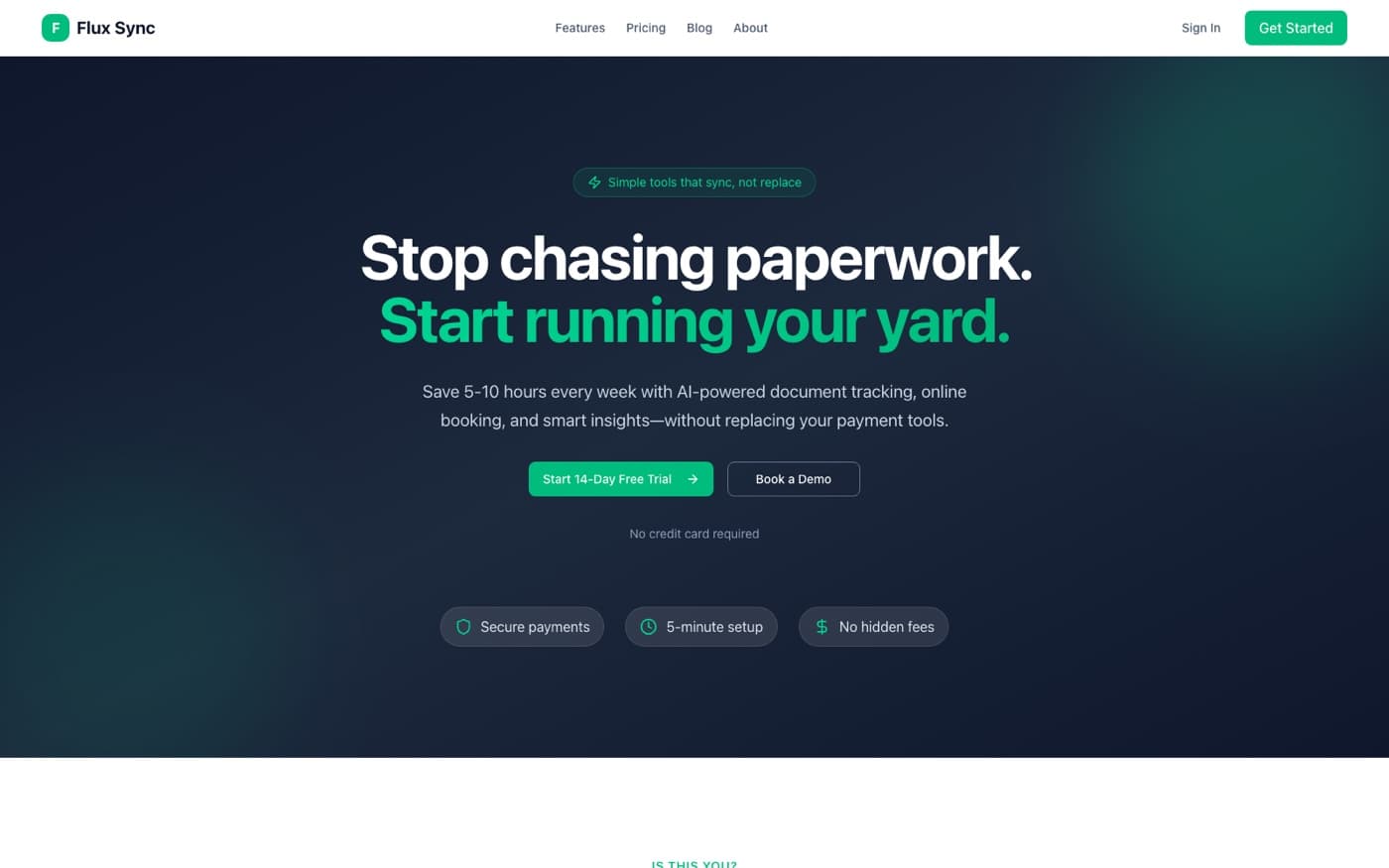
Flux Sync

Multi-tenant SaaS for storage-yard operators.
Live
Flux Sync screenshot

The problem

Storage and parking yards run on spreadsheets and paper. I'd already built software for my own yards, so I turned it into a product other operators could use. The approach is “sync, don't replace” — it connects to the tools they already use like Stripe and QuickBooks instead of forcing a switch.

What I built

A full multi-tenant platform where each business is its own isolated tenant. Online booking with an embeddable widget, AI document parsing that tracks expirations, a customer portal, subscription billing, and a separate AI service for parsing and insights. Around 42,000 lines of code, plus a security audit I ran myself.

Next.jsReactTypeScriptClerkPrismaPostgreSQLStripe ConnectPython/FastAPIGemini
Paddock PMS

The software that runs a storage business.

In production since 2023

The problem

Running multiple storage locations by hand means endless paperwork, manual invoicing, and lost bookings. I built the entire software backbone so the business runs itself.

What I built

12 connected apps covering booking, digital leases with e-signatures, automated recurring invoicing, Stripe payments, two-way QuickBooks sync, gate codes, and an investor data room for due diligence. The headline piece: one payment automatically creates the customer, assigns their spots, generates a gate code, builds the invoice and lease, sends the emails, and syncs the books. It's still running every day across 3 locations.

Admin Dashboard
Booking Page
Customer Portal
Lease Engine
Invoice System
QuickBooks
AI Parser
GoHighLevel
Gate & Inventory
DjangoPythonPostgreSQLStripeQuickBooksGoogle Cloud StorageInternal API for AI agents

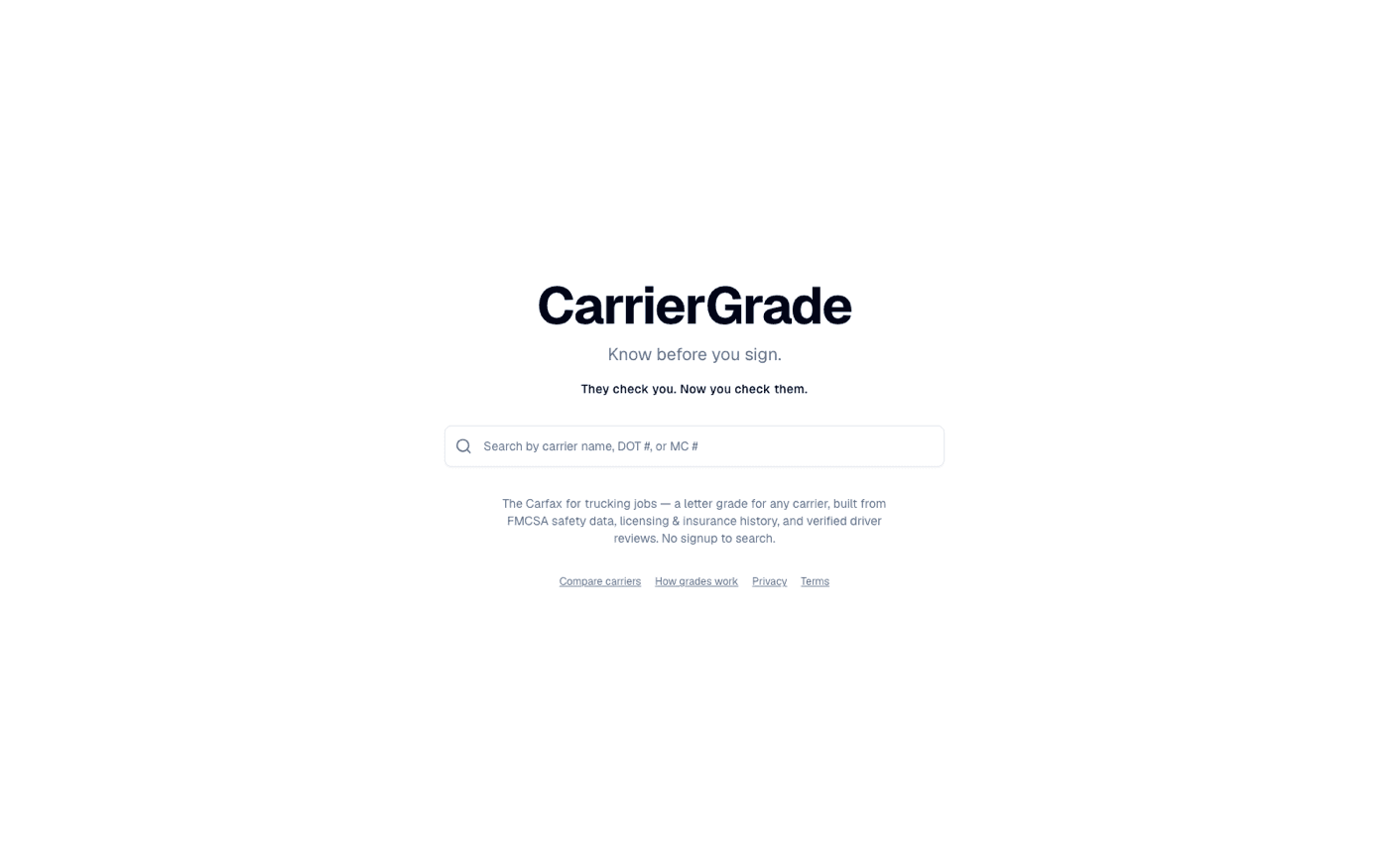
CarrierGrade

Carrier ratings for truck drivers.

MVP
CarrierGrade screenshot

The problem

Carriers screen every driver through paid databases, but drivers pick who to work for based on a recruiter's word. CarrierGrade flips it: search any carrier and get an A to F grade built from safety data, live market signals, and verified reviews.

What I built

A pipeline that loads around 4.45 million carriers and 877,000 safety records, and a scoring engine designed to be fair (it shrinks tiny sample sizes so two clean inspections don't look perfect, and compares carriers to others their own size). I backtested it against history and it would have flagged Convoy and Yellow as high risk months before they collapsed.

Next.jsReactTypeScriptSupabasePythonFMCSA & SONAR data

FuelIQ

Fuel savings for trucking fleets.

In pilot with a partner fleet

The problem

Even fleets with a strict fuel policy leave money on the table, because prices swing a lot between stops on the same route. FuelIQ tells dispatchers the cheapest reachable stop and tracks whether drivers actually take it.

What I built

A recommendation engine that accounts for how loaded the truck is, hours-of-service limits, truck-safe routing, and cheaper fuel across state lines, while always keeping enough range so a truck is never stranded. The savings number is deliberately honest and only counts money the app actually saved.

PythonFastAPIPostgreSQLRedisCeleryNext.jsHERE MapsTwilioSamsara

OpenClaw / Lani

In use

A self-hosted AI agent I built to handle the routine parts of running my businesses. It connects to Gmail, Google Calendar and Drive, GoHighLevel, and QuickBooks, and takes care of reporting, invoice workflows, and routine communication.

WorkStyle Insights

Live

A DISC-based assessment that shows how someone works and how well they'd fit with a team. A quick build in a different domain from the rest.